
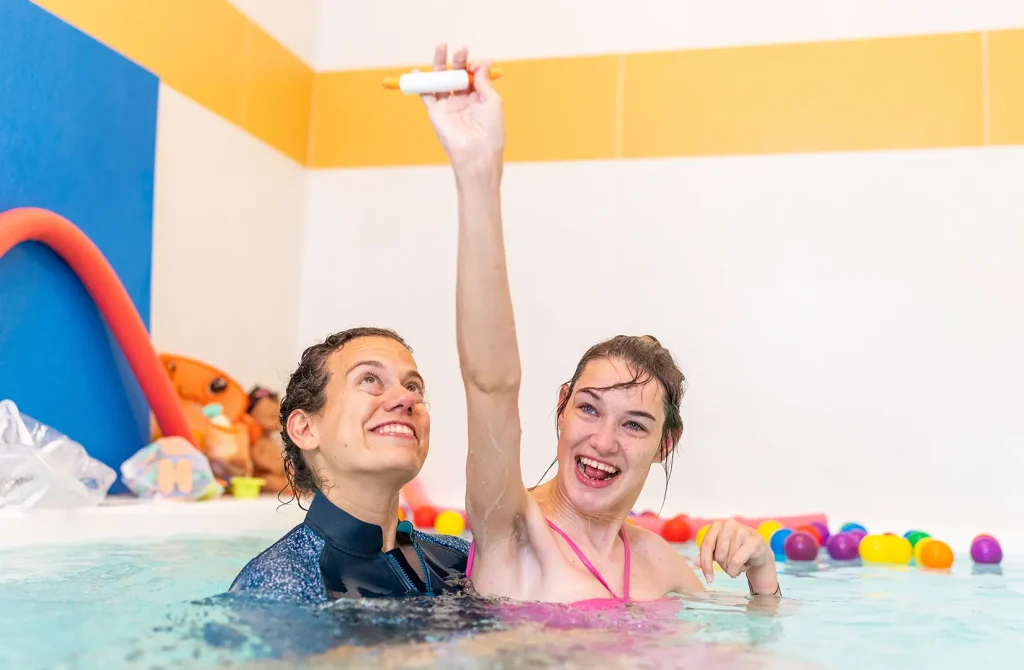
Occupational Therapists are often looking for ways to help clients achieve meaningful goals when traditional land-based activities become difficult, uncomfortable or limiting.
Aquatic therapy can provide a unique environment where gravity, pain, balance challenges and mobility limitations have less impact on movement and participation. For many people, the water creates opportunities that simply aren’t possible on land.
While aquatic therapy is not suitable for every individual, there are several signs that it may be worth exploring as part of a client’s rehabilitation, wellbeing or participation plan.
1. Pain Is Limiting Their Ability to Exercise or Participate
One of the most common reasons clients benefit from aquatic therapy is pain.
Conditions such as arthritis, chronic pain, fibromyalgia, joint injuries and post-surgical recovery can make traditional exercise difficult or intimidating. The buoyancy of water helps reduce the load placed on joints and muscles, often allowing clients to move more comfortably and for longer periods.
Many clients who struggle to walk, exercise or complete rehabilitation activities on land find they can perform movements in the water with significantly less discomfort.
For Occupational Therapists, this can create opportunities to improve mobility, endurance and confidence while supporting participation goals.
Consider aquatic therapy if:
- Pain limits daily activities
- Land-based exercise is poorly tolerated
- Clients avoid movement due to discomfort
- Weight-bearing activities increase symptoms
2. They Have Difficulty With Balance or Fear of Falling
Balance challenges can significantly impact a person’s confidence and independence.
Whether caused by ageing, neurological conditions, injury or deconditioning, concerns about falling often lead people to reduce their activity levels. Unfortunately, this can create a cycle where strength, mobility and confidence continue to decline.
The supportive nature of water can provide a safer environment for movement practice. Clients may feel more confident exploring walking, reaching, turning and balance activities when they know the risk of injury from a fall is reduced.
This can be particularly valuable for people living with:
- Stroke
- Parkinson’s disease
- Multiple sclerosis
- Vestibular disorders
- Age-related balance decline
The psychological benefits can be just as important as the physical gains.
3. Mobility Limitations Are Restricting Participation
Sometimes the issue is not therapy itself, it’s access to meaningful activities.
Clients who use wheelchairs, mobility aids or require assistance for transfers may face significant barriers to exercise, recreation and community participation. Water can provide a sense of freedom that many people have not experienced for years.
The buoyancy provided by the pool allows some individuals to move with greater ease, explore movement patterns and participate in activities that would otherwise be difficult or impossible.
For many clients, the pool is not simply a treatment environment. It is a place where they can reconnect with activities they enjoy and participate alongside family, friends and their community.
Potential indicators include:
- Reduced walking tolerance
- Wheelchair dependence
- Progressive mobility conditions
- Difficulty accessing recreational activities
- Social withdrawal due to physical limitations
4. Traditional Therapy Approaches Have Reached a Plateau
Every Occupational Therapist has worked with clients who appear to have stalled in their progress.
While aquatic therapy is not a replacement for traditional rehabilitation, it can provide a different environment that encourages engagement and movement. Some clients respond positively to the novelty, reduced physical demands and increased confidence that water provides.
The ability to practise movement in a supportive environment may help clients explore activities that feel too difficult on land.
Introducing aquatic therapy can also help improve motivation, particularly when clients become frustrated or disengaged with conventional exercise programs.
In many cases, changing the environment can be enough to create new opportunities for progress.
5. Their Goals Involve Recreation, Community Participation or Quality of Life
Occupational Therapy is about more than physical function.
Many client goals relate directly to participation, enjoyment, independence and overall wellbeing. Aquatic environments can support all of these outcomes.
A child may want to join swimming lessons with classmates. An adult may want to return to exercise after injury. An older person may simply want to enjoy time in the pool with grandchildren.
These goals are often deeply meaningful because they connect people with their families, communities and preferred lifestyles.
Aquatic therapy and aquatic participation can help bridge the gap between rehabilitation and real-world engagement.
Examples of participation-focused goals:
- Swimming with family
- Joining community programs
- Returning to exercise
- Improving confidence in public settings
- Maintaining independence and wellbeing
Looking Beyond Therapy
Aquatic therapy is often viewed through a clinical lens, but its impact extends far beyond rehabilitation.
For many people, access to the water means freedom. It means being able to participate alongside family, reconnect with enjoyable activities and experience movement without the limitations they encounter on land every day.
If your client is experiencing pain, mobility challenges, balance concerns, reduced participation or has reached a plateau with traditional approaches, aquatic therapy may be worth considering.
Sometimes the greatest benefit is not what happens during the therapy session, it’s what becomes possible afterwards.
Para Mobility’s range of accessible aquatic solutions helps create safer and more inclusive pathways into the water for people with diverse mobility needs.
Because everyone deserves the opportunity to experience the benefits that aquatic participation can provide.