
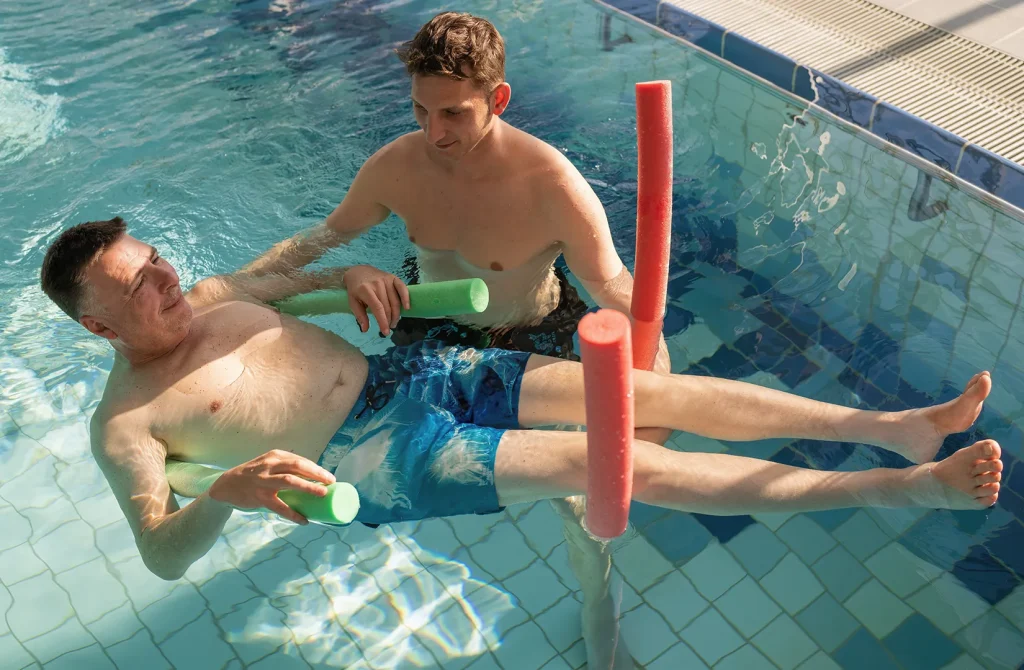
For many people with disability, injury, chronic illness or reduced mobility, the pool can be more than a place for recreation. It can support movement, confidence, independence, therapy goals and meaningful participation.
Occupational Therapists play an important role in helping clients access these benefits safely. However, recommending a pool access solution is rarely as simple as choosing one piece of equipment. The right option depends on the person, the environment, the level of support available and the goals the client wants to achieve.
When assessing aquatic access, OTs may need to consider several practical and clinical factors.
Start With the Client’s Functional Ability
The first consideration is how the person currently moves, transfers and participates.
Some clients may be able to stand, step or complete a supported transfer with minimal assistance. Others may require full lifting support from a wheelchair or mobility device. Some may have strong upper body function but limited lower limb mobility, while others may need greater postural support and carer assistance.
Key questions may include:
- Can the client transfer independently?
- Do they require one or two-person assistance?
- Can they sit upright safely?
- Do they have reliable head, trunk or limb control?
- Can they follow instructions around water safety?
- Are their needs likely to change over time?
These answers help determine whether the person may benefit from a pool hoist, aquatic wheelchair, access seat, steps, or a combination of solutions.
Consider the Whole Access Pathway
True pool access does not begin at the edge of the water. It starts from the moment the person arrives.
For many clients, barriers may include car parking, change rooms, shower access, pool deck surfaces, transfer space and the distance between amenities and the pool. A pool may technically have an access device, but if the client cannot safely move from the change room to the pool edge, participation may still be limited.
Aquatic wheelchairs can be especially valuable in this pathway. They can support movement across wet areas, reduce the need for repeated transfers and help clients move from change rooms to poolside with greater dignity and comfort.
Match the Solution to the Environment
The best access solution for a public aquatic centre may not be the same as the best solution for a private home, rehabilitation centre, hotel, school or community facility.
OTs may need to consider:
- Pool design and edge profile
- Available deck space
- Storage space
- Whether the solution needs to be portable
- Indoor or outdoor conditions
- Frequency of use
- Staff training and supervision
- Whether multiple users will require access
For example, a Pelican Pool Hoist may support safe, assisted transfers into and out of the water for people who cannot enter via steps or ladders. Aquatic wheelchairs may help complete the access journey by supporting safe movement around the pool environment. In some settings, a combination of equipment may create the most practical and inclusive outcome.
Think About Independence, Not Just Entry
Access is not only about getting into the water. It is also about how the person feels during the experience.
A solution that supports greater independence can have a powerful impact on confidence, motivation and dignity. For some clients, being able to participate with less physical handling may reduce anxiety and make aquatic activity more enjoyable. For others, the ability to join family, peers or therapy sessions in the water may support broader occupational goals.
OTs are well placed to consider these human outcomes, not just the functional task of transfer.
Reduce Manual Handling Risks
Pool access can involve significant manual handling demands for carers, family members, support workers and facility staff. Lifting, lowering or supporting a person around wet surfaces can increase the risk of injury for both the client and the person assisting.
Appropriate equipment can help reduce these risks by providing a safer and more controlled transfer process. A well-matched pool hoist, access seat or aquatic wheelchair may reduce the need for awkward lifting, improve positioning and support a more predictable routine.
This is especially important in facilities where multiple people may use the equipment throughout the week.
Consider Comfort, Dignity and Confidence
The experience of using pool access equipment should feel safe, respectful and comfortable.
Clients may be hesitant to use equipment if they feel exposed, rushed or unsupported. OTs can help by considering the person’s preferences, communication needs, sensory needs and previous experiences with transfers or water-based activities.
Small details can make a meaningful difference. These may include preparing the client before the first use, explaining each step, ensuring privacy where possible, checking seating support and allowing enough time for a calm transition into the water.
Plan for Changing Needs
Mobility and support needs can change over time. A client recovering from injury may become more independent, while a person with a progressive condition may require greater assistance in the future.
Where possible, OTs should consider solutions that remain practical as needs evolve. This may mean recommending equipment that can support a range of users, accommodate different transfer needs or be used across multiple settings. This is the leading reason we developed the Pelican Pool Hoist to offer a portable solution alongside an extensive range of accessories to cater to the most diverse audience possible.
For families, facilities and care providers, future-ready equipment can provide better long-term value and reduce the need for repeated adjustments.
Support Participation Beyond Therapy
Aquatic access is often discussed in a therapy context, but its value extends much further.
Being able to enter the pool can support recreation, family connection, community participation, physical activity and emotional wellbeing. For children, it may mean joining swimming lessons or playing with siblings. For adults, it may mean returning to exercise, rehabilitation or social activities. For older people, it may help maintain movement, confidence and routine.
These outcomes sit strongly within the OT focus on meaningful participation.
Choosing the Right Pool Access Solution
There is no single solution that suits every person or every pool. The best outcome usually comes from matching the equipment to the client’s abilities, goals, environment and support network.
For Occupational Therapists, important considerations include:
- The client’s transfer ability
- Level of support required
- Wheelchair or mobility equipment use
- Postural control and comfort
- Pool layout and access pathway
- Safety and manual handling risks
- Independence and dignity
- Long-term changes in need
- The setting where the equipment will be used
By taking a whole-person and whole-environment approach, OTs can help clients move beyond simply accessing the pool and towards greater participation, confidence and inclusion.
Para Mobility’s range of pool access equipment, including the Pelican Pool Hoist and Aquatic Wheelchairs, is designed to support safer, more inclusive aquatic environments for people with a wide range of mobility needs.
For Occupational Therapists working with clients, families, care providers or facilities, the right equipment can help turn aquatic access from a barrier into a real opportunity for participation.